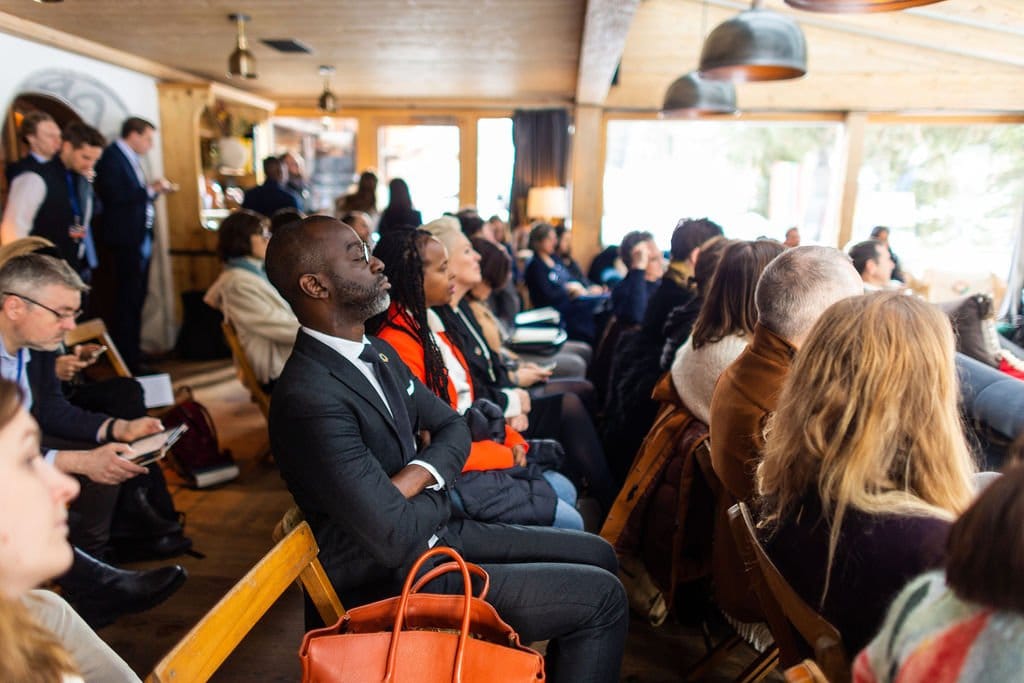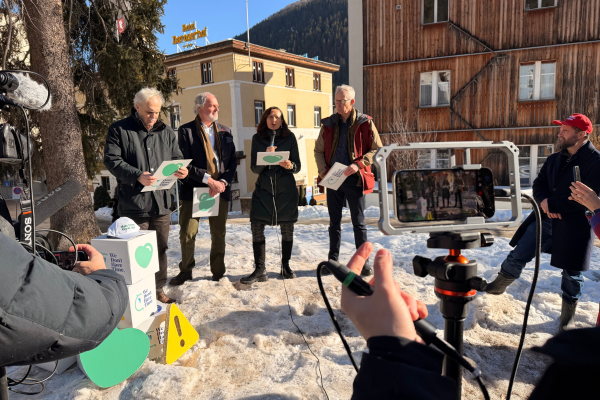
On Wednesday 18 January, Earth4All and Goals House held a panel talk ‘The cost of (in)action: financing economic systems change’ in parallel to the World Economic Forum in Davos, Switzerland.
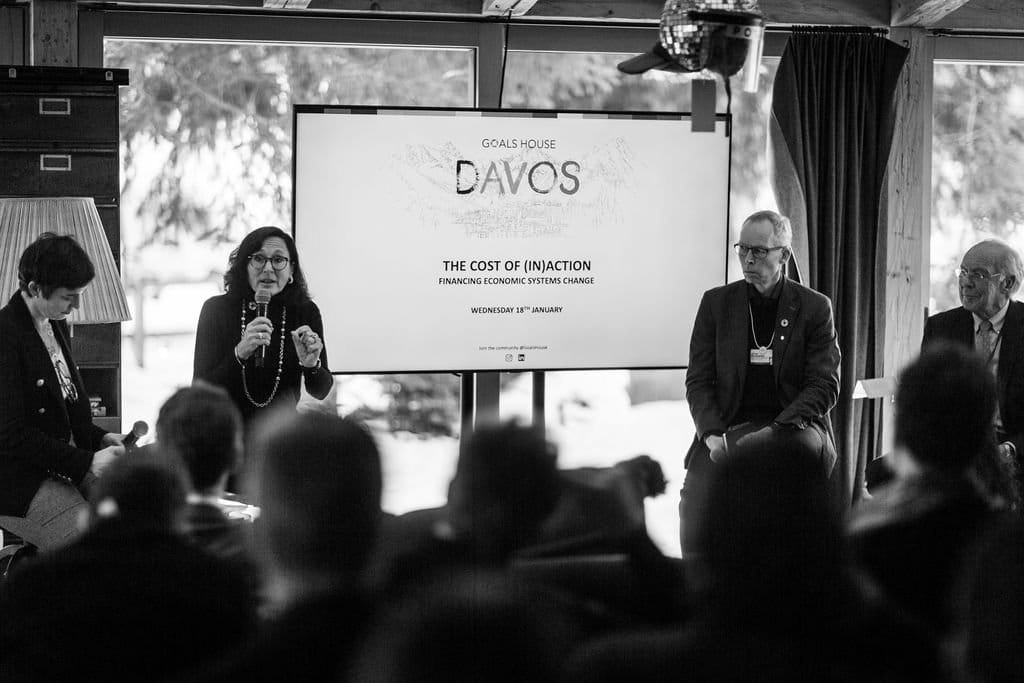
Responding to the intertwined environmental, security, and social emergencies of the past year, Earth for All presented a new plan for healthier lives on a healthier planet. Getting there will require us to radically re-think our extractive system, but as we navigate economically and socially uncertain times, an important question remains: how will we pay for this transformation? Who will bear the cost of saving the world?
This Goals House session discussed the real cost of economic systems change for governments, business and philanthropy, looking at what new policies and financing mechanisms are needed today, in order to create the opportunities of tomorrow.
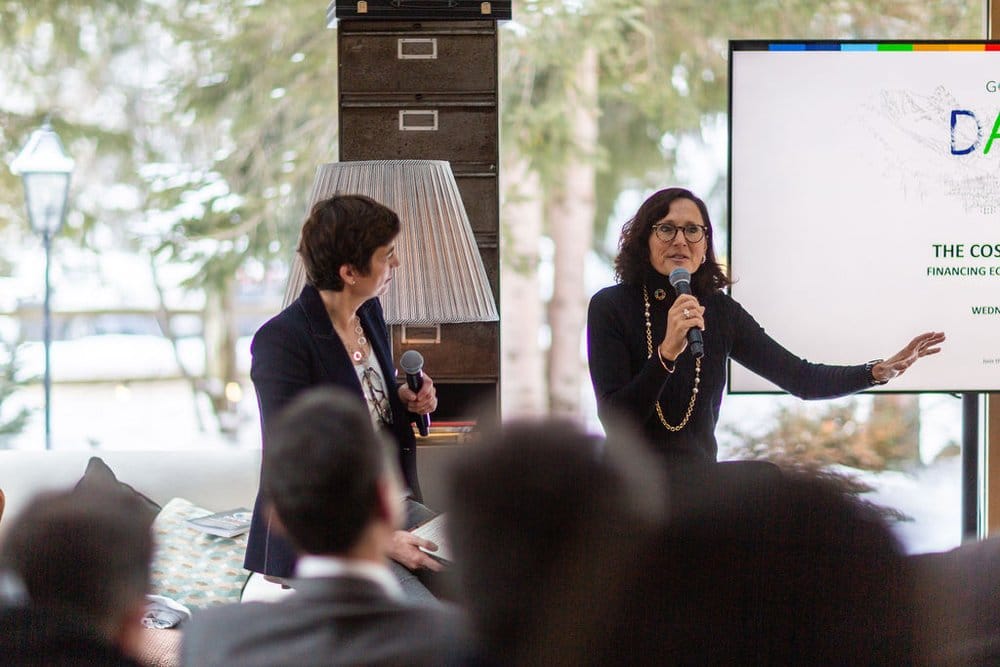
Sandrine Dixson-Declève introduced the Earth4All initiative and pointed out that: “The extra investment needed to build a more resilient civilisation is likely to be in the order of 2% to 4% of global income per year.” She also made clear that there need to be specific solutions for Low Income Countries, including debt relief for countries that require it, the regulation/ restriction of foreign investment in brown industries as well as the reconsideration of the role of regional trade.
Johan Rockström pointed out that “from a scientific perspective Earth4All is a breakthrough. While it is great the we finally have a landing zone as agreed in Paris or Montreal, every day we delay, the path will be steeper. Earth4All shows that nothing less than implementing the five turnarounds is required urgently”.
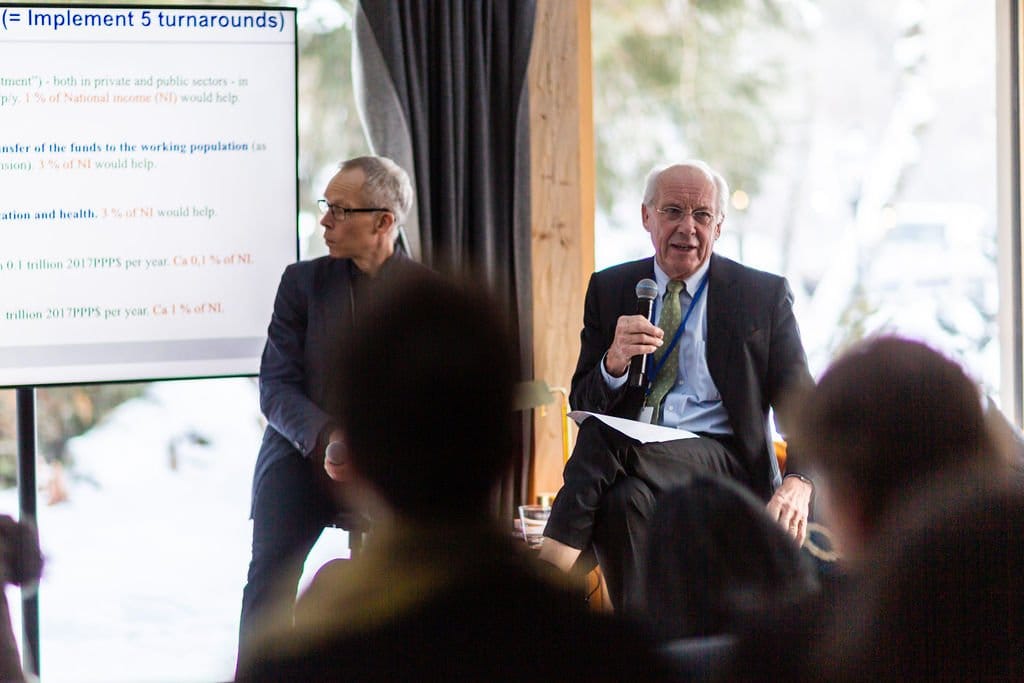
Jørgen Randers added that “unless something extraordinary is done, the result will be declining wellbeing for the global majority. The required action includes – according to Earth for All – to do a number of things even before they become profitable from the investor point of view and to supplement the market response with a (collective) government response, including more subsidies, bans, and taxes”. He also pointed out that the extra costs need to be paid for by the 10% richest of society, in order to achieve public support by the majority, e.g. by an internationally coordinated increase of corporate taxes.
Additional speakers included Runa Khan, Nik Gowing and Sweta Chakraborty. The event was moderated by Sophie Lambin.