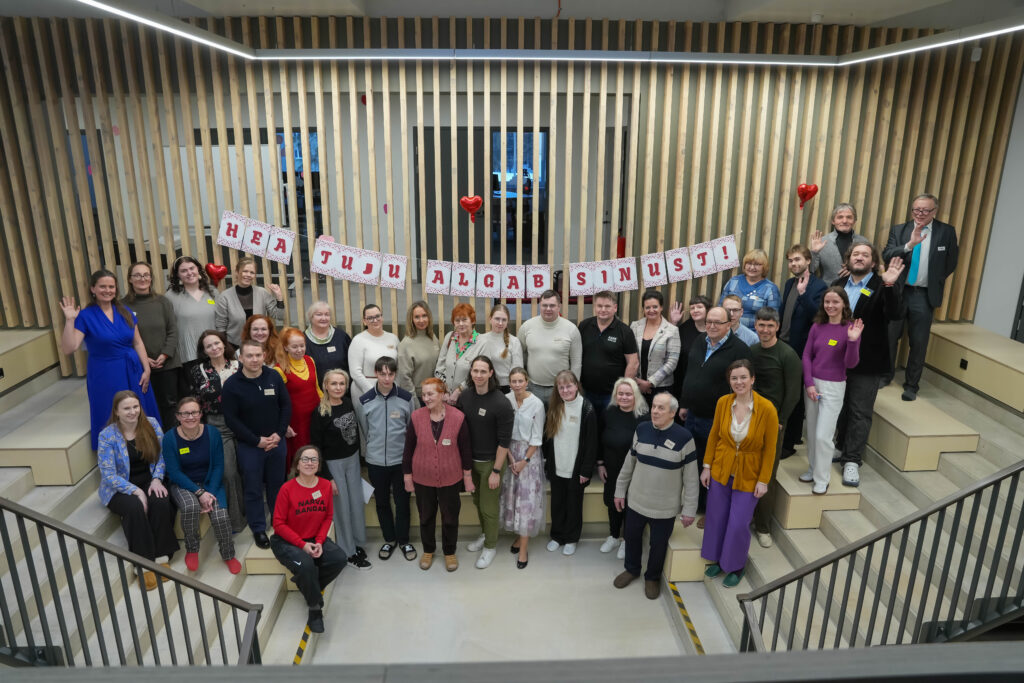
In January and February 2026, a cross-section of Estonians gathered to participate in the Citizens’ Panel on Good Life to discuss Estonia’s future economic and social policy. The core objective was to reimagine Estonia’s societal priorities through the lens of wellbeing for both people and the planet. The Panel was inspired by the Earth4All turnarounds and, as prioritised by more than 600 candidates for the Panel, focused on two turnarounds: poverty and economic inequality as obstacles to a good life.
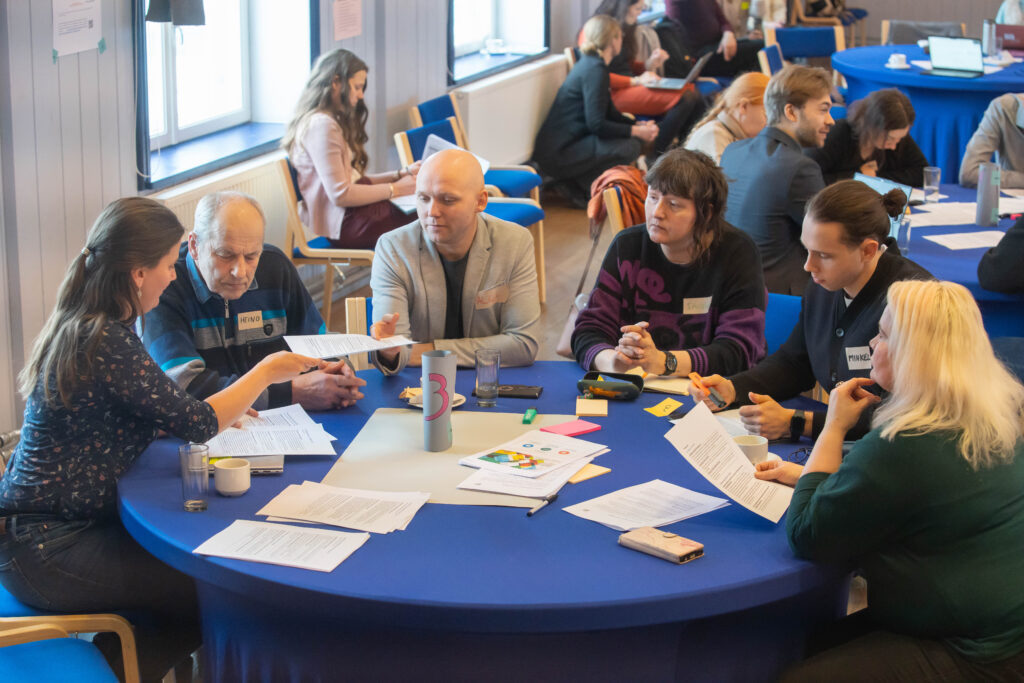
The Panel was formed through a two-stage random selection of 30 residents, representing a cross-section of the population based on various characteristics. This mini-Estonia gathered for 5 days over three weekends. Participants learned about the systems approach from experts on economy, environment and social issues, and to help them better understand possible and existing solutions for reducing poverty and inequality, more than 15 stakeholders presented their proposals. Participants deliberated in groups of five or six, with the help of table facilitators.
Among other activities, participants talked to the seventh generation (inspired by The Work that Reconnects) and went skating in a community-organised ice rink disco with -30 degrees outside. Like every proper Estonian gathering, there was a sauna evening at a local community sauna.
As a result of the mini-public, five societal pain points and 12 proposals to alleviate them were identified:
- Unequal starting position for kids and youth
- Worsening mental health
- Unequal treatment, especially of disabled people
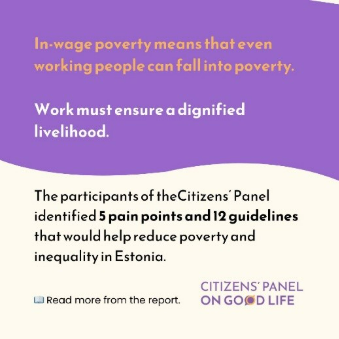
- Wage poverty
- An economic model that does not serve wellbeing
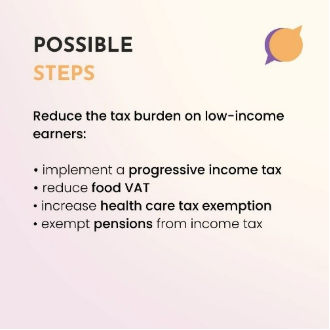
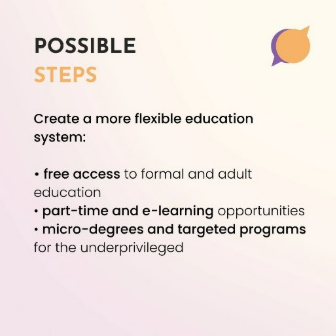
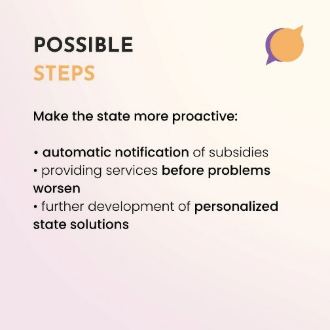
Every societal pain point is explained with arguments and facts, and has proposals to work out solutions. As an example, here is what this looks like for pain point four—wage poverty:
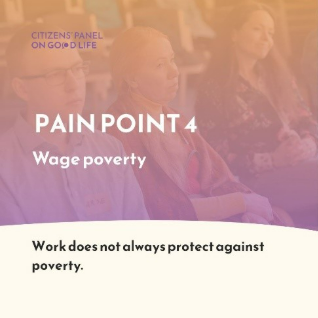
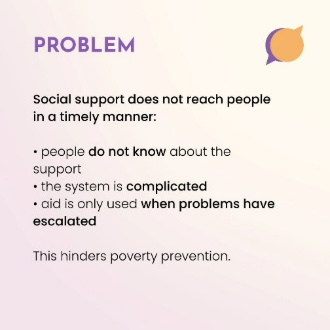
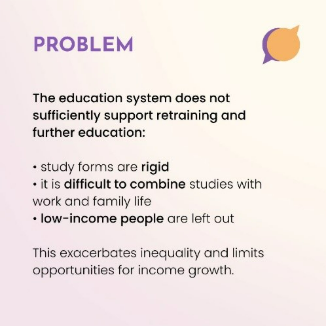
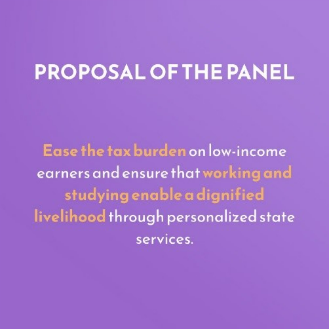
You can read about all five societal pain points as well as proposals to alleviate them in the Panel’s report (in English)*.
The Panel published these five societal pain points as a public statement. A few weeks later, the report of the Panel was published with recommendations for alleviating poverty and economic inequality.
Did we achieve what we wanted?
As organisers, we wanted to create a space for informed and constructive public dialogue, and to connect Estonia with the wider global movement calling for an economy that serves people and the planet. In the light of the parliamentary elections in spring 2027 the Citizens’ Panel raised topics that have been long discussed in our society, but that little has been done to “solve”.
This was the first time that a cross-section of Estonians mandated the (pretty neoliberal) government to alter the economic system to serve us all, not just the wealthy (pain point five). We hope this will create lively discussions and actions around wellbeing economies in Estonia and the Baltics, since there has not been much happening until now.
Work with the outcomes continues: civil society organisations whose interests align with the proposals are co-creating collective addresses to the parliament. In this way, we are linking the results of the Panel with Estonia’s most rooted democratic innovation: the right to address the parliament with collective initiatives on rahvaalgatus.ee. Several civic organisations have already used the outcomes in their advocacy work.
The pre-election discussions will show how well the mini-public managed to influence the focus of Estonia.
What we learned
1. The Earth4All framework helped to narrow down priorities.
The question “What is needed for a good life?” could be approached in many ways. We chose the Earth4All model, since it was not too well known (also among researchers) in Estonia. As systemic change agents we are inspired by the holistic approach of Earth4All as well as its optimistic messages.
We let the candidates of the Citizens’ Panel choose between four of the five Earth4All turnarounds. We left out the energy turnaround, because, compared to other four, an active societal discussion and real-world activities are happening in Estonia.
We asked people who registered to indicate which of the four topics they consider important to address in today’s Estonia. 630 people prioritised economic inequality and poverty as the topics that are underdiscussed in our society. Many of the 30 final participants had real-life experiences with poverty.
Giving the agenda-setting power to citizens worked well. There really are no other forums for that on a national scale.
In the Panel we did not manage to cover the global perspective for ending poverty. The Global North’s responsibility could be a topic for a separate mini-public, since the general understanding about post-colonialism is low in Estonia.
2. Organising a mini-public in the spirit of civil society improves collaboration culture.
The sixth mini-public in Estonia was special: it was commissioned and conducted by civil society organisations. We invited partners according to the focus theme of the Panel so that the results would have more owners. One month after publishing the outcomes we held a co-creation workshop with all partners: they gathered around five societal pain points and deliberated on follow-up activities, including initiating collective addresses to the parliament. This work is ongoing.
3. Situated next to aggressive Russia, we constantly need to work with the general trust in Estonia.
According to the OECD data, only about 38% of people in Estonia trust their government. Just 17% feel that the political system enables people to participate in governance.
To overcome deep polarisations we need balanced discussions and well-considered decisions that go beyond election cycles and better reflect the needs of Estonians. In addition to deliberative mini-publics, other democratic initiatives like dialogue circles, collective addresses to the parliament and participatory budgeting help to increase the general trust. Combinations of these innovation help to mainstream them.
Learn more about the Assembly: https://rahvakogu.info/en/goodlife/
Watch the video about the process, with English subtitles: https://www.youtube.com/watch?v=MH2r-1nUC8c
* An assessment report about the Citizens’ Panel on Good Life will be out during the second half of 2026.