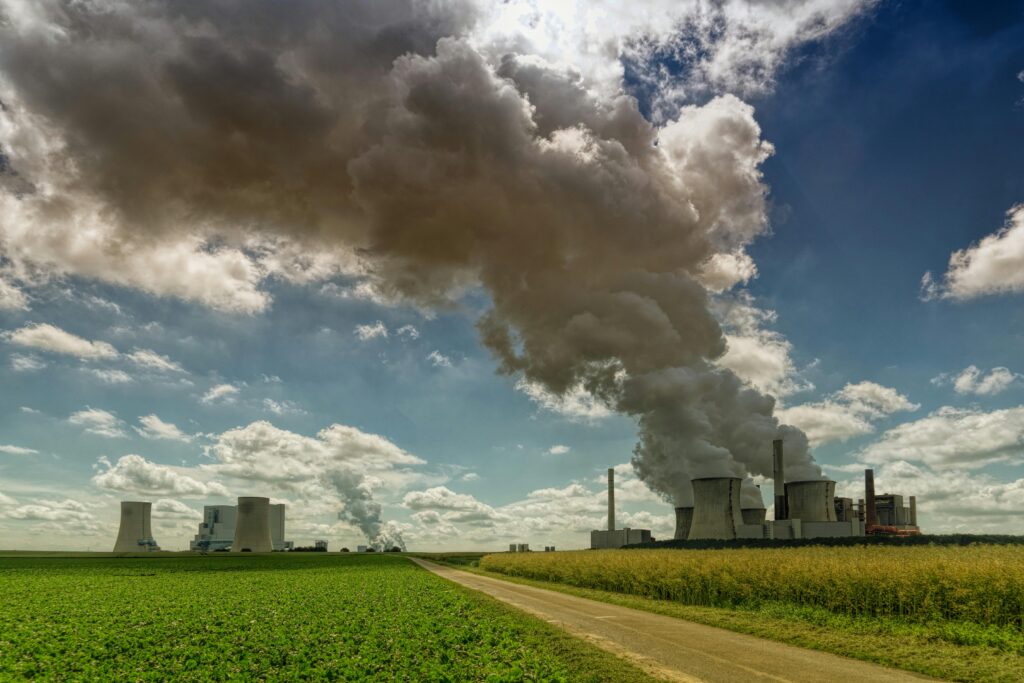
When the gavel finally fell at COP30 in Belém, the familiar sting of frustration returned. Once again, a climate conference that could have been historic ended as a missed opportunity. The progress made—while real—felt painfully small compared to what the science demands and what people across the planet urgently need.
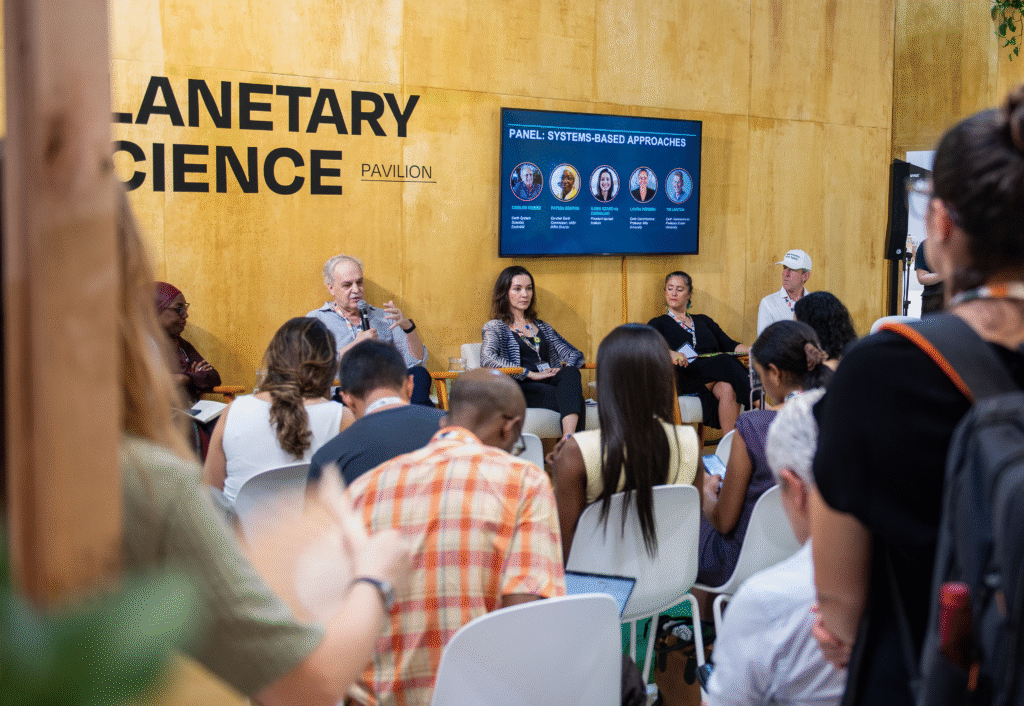
This COP failed many:
- Failed Indigenous peoples of the Amazon, who stormed the venue the week before in defense of their land and futures.
- Failed Colombia’s delegation, whose diplomat was denied the floor in the final minutes.
- Failed scientists—including myself—who had just reminded negotiators that halting deforestation and phasing out fossil fuels is not optional but necessary for planetary stability.
- Failed young people calling for a livable future.
- Failed even the Brazilian Presidency, which entered this COP with a bold mandate for truth, people and implementation.
The irony is stark: COP30 took place in the Amazon but delivered only a cosmetic nod to protecting it. A roadmap supported by 90 countries to halt deforestation was dropped. Petro-states succeeded in removing every reference to fossil fuels. And so the Achilles heel of the COP process was laid bare: a multilateral system designed for consensus in an age that demands courage.
Yet amid the disappointment, something else happened—something quieter, but real.
Grassroots leadership surfaced. Coalitions formed outside the formal negotiations to advance fossil fuel phaseout mapping and deforestation goals. And in Brazil, a deeper shift emerged: a reminder that climate action is fundamentally about people—those protecting the forest, those living climate injustice, and those who keep showing up despite profound institutional fatigue.
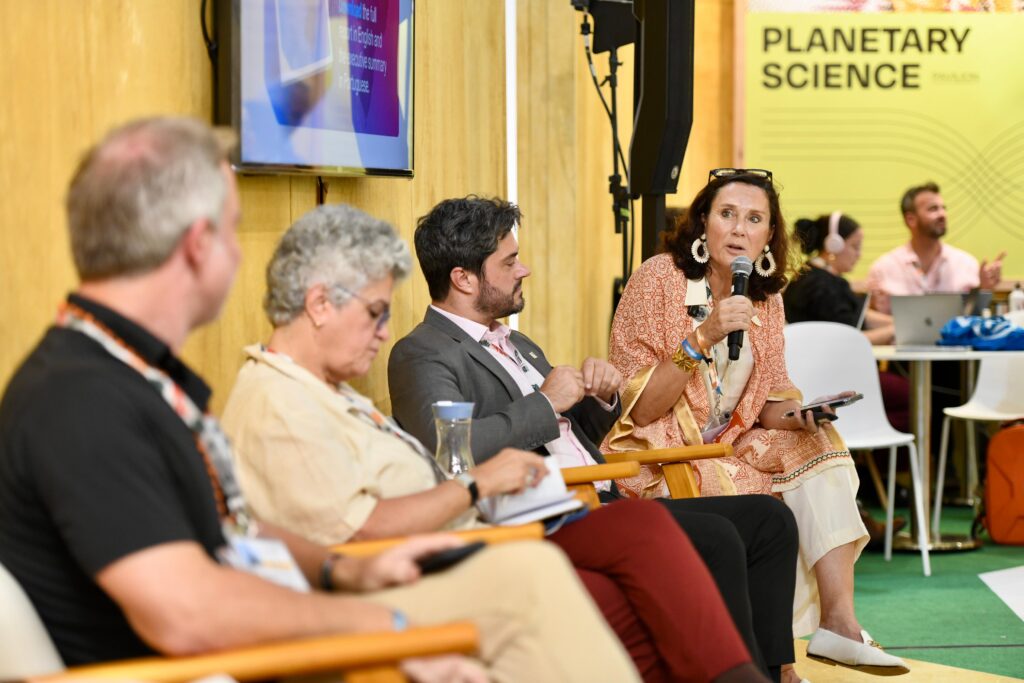
I left Belém struck by a fragile but unmistakable spark of collective will. A belief that the future can still be rewritten—with clarity, purpose, and courage. But only if we choose to confront the elephants in the room and pay attention to the black swans already circling.
Here are the ones we must now urgently face.
Elephant / Black Swan 1: Climate emergency vs. climate mediocracy
We are not winning the war against climate mediocracy. Despite overwhelming scientific evidence—including having crossed 7 of 9 planetary boundaries—countries continue to block commitments on fossil fuels and deforestation.
Scientific truth is not enough. We must evolve our narratives, integrate system dynamics modelling, and make the converging climate–social tipping points impossible to ignore. If science is to drive action, it must speak more powerfully and more strategically.
Elephant / Black Swan 2: The not-so-invisible hand
While Saudi Arabia blocked fossil fuel phaseout language in Belém, its Crown Prince was hosted in Washington for a major trade and investment deal. The invisible hand is not invisible at all.
The U.S., through alliances with fossil producers, continues to shape outcomes—quietly and decisively. This raises a simple but uncomfortable question:
How can climate negotiations deliver climate outcomes when they are structurally vulnerable to fossil-powered geopolitics?
Elephant / Black Swan 3: China’s absence from climate leadership
Anticipation that China might fill the climate leadership vacuum proved misplaced. China aligned with blockers on fossil language, abstained from climate finance, and signalled that its strategy is techno-economic—not political.
China will dominate solar and battery markets, but not the politics of phaseout, finance, or forest protection. And without U.S. engagement, China will not take risks on the global stage. This reshapes the geopolitical equation for future COPs.
Elephant / Black Swan 4: Europe’s ambiguous message on fossil fuels
President von der Leyen’s statement—“We are not fighting fossil fuels, we are fighting emissions”—signalled a drift toward political expediency. It may reassure centrists and conservatives, but it raises critical questions:
Does this open the door for CCS as a lifeline for oil and gas? Does it dilute Europe’s previous clarity on phaseout? Or is it simply diplomatic framing for domestic audiences?
Clarity matters. Ambiguity is a gift to delay.
Elephant / Black Swan 5: Consensus voting and the case for COP Reform
The consensus requirement at COPs has become a structural veto. COP30 made this painfully clear: a small group of petro-states blocked outcomes supported by the majority.
The good news: countries are no longer waiting. Climate Clubs are forming to advance fossil phaseout and deforestation goals outside the UN process.
Reform is being explored by the Brazilian Presidency and UNFCCC leadership. It is long overdue—and increasingly existential.
Elephant / Black Swan 6: The disconnect between national action and non-state leadership
A striking shift occurred this year: non-state actors surged ahead while geopolitics held governments back.
Companies signalled they are staying the course.
Cities and regions displayed ambition.
The finance sector remains ready to fund decarbonisation.
But the widening divergence between state and non-state leadership creates a major risk: political backlash—particularly from the U.S. and Saudi Arabia—could undermine scientific frameworks and weaken the COP itself.
Elephant / Black Swan 7: Who gets to be in the room?
Even with new disclosure rules, fossil lobbyists remained a dominant force—1,600 of them, nearly one in every 25 delegates. Many entered through party badges.
This undermines trust, transparency, and the integrity of negotiations. Stronger criteria for participation are essential—not only for corporate delegates but also for national delegations.
Elephant / Black Swan 8: Choosing COP presidencies wisely
We have long called for eligibility criteria for COP presidencies. At last, this is on the UNFCCC table.
COP30 benefitted from a Presidency that valued science, accountability, and people. But the road to COP31 is far less reassuring, with candidates who do not fully embrace climate urgency.
Without credible leadership, the COP process cannot deliver what the world needs.
Additional elephants and black swans we must now confront
The list does not end at eight. If COP30 revealed anything, it is that deeper structural fractures—and emerging risks—are shaping outcomes more than the negotiations themselves.
Elephant / Black Swan 9: The finance mirage vs. real economy shifts
COP30 delivered trillion-scale finance headlines, but much remains indicative rather than binding. The gap between pledged and accessible finance—especially for adaptation and loss and damage—risks a legitimacy crisis if “Mutirão money” appears on paper but not in projects and resilience on the ground.
Unless COP-level finance decisions catalyze fiscal reform, debt relief, and de-risking mechanisms that mobilise private capital at scale, “historic finance packages” will keep recycling trust without shifting the real economy.
Elephant / Black Swan 10: The just transition that isn’t yet just
Language on a “just and equitable transition” expanded, but without guarantees for workers, fossil-dependent regions, and vulnerable communities, it risks becoming a slogan rather than a social contract.
A real just transition requires social protection, labour roadmaps, and community-led decision-making—not only emissions targets.
Elephant / Black Swan 11: Adaptation and loss and damage as political orphans
Mitigation dominated headlines, while adaptation and loss and damage remained at the margins of power.
Operationalisation remains fragile—under-capitalised, fragmented, and hard to access for frontline communities.
If impacts accelerate faster than support, even ambitious mitigation will coexist with spiraling humanitarian crises and instability.
Elephant / Black Swan 12: data integrity, disinformation and public trust
COP30 was the “COP of Truth” and acknowledged both climate disinformation, but also that current mandates fall far short of the scale of the problem.
Fossil-aligned actors and political leaders weaponise disinformation to erode trust in science, multilateralism, and climate policy—undermining COP outcomes before they even reach citizens.
Without stronger guardrails, even the best decisions can be neutralised in the arena of public opinion.
Elephant / Black Swan 13: The implementation gap inside countries
Even the strongest COP decisions depend on national follow-through. Many governments lack the political will, administrative capacity, or institutional coherence to implement.
Domestic incumbents—agribusiness, fossil firms, segments of finance—exploit weak governance to dilute or delay action. Closing the implementation gap means aligning NDCs, tax systems, industrial policy, and national development strategies with climate goals.
Elephant / Black Swan 14: Equity, trust and the fractured Global South
North–South trust deficits resurfaced sharply in Belém. Many developing countries view finance shortfalls, rigid macro-rules, and delayed support as proof that promises remain unkept.
At the same time, the Global South itself is divided—between fossil-exporters, climate-vulnerable islands, and emerging industrial economies. Operationalising equity—fair shares, credible finance, technology access, and debt solutions—is essential for COP legitimacy.
Elephant / Black Swan 15: Metrics, planetary boundaries and governance lag
COP30 decisions still rely on national emissions, GDP, and incremental targets, while science points to breached planetary boundaries and cascading risks.
A next-generation COP agenda must integrate planetary boundaries, tipping points, and “beyond GDP” metrics into economic governance, from fiscal rules to central bank mandates.
What must come next
COP30 did not deliver the breakthroughs many hoped for. But reform efforts—by the UNFCCC and the Brazilian Presidency—are real and deserve support.
We must now recognise a hard truth: the fight for multilateralism has become as essential as the fight for climate action itself. Bottom-up pressure—from citizens, scientists, Indigenous communities, youth, cities, finance, and industry—must expand. The Global Stocktake, Ethical Stocktake, Climate Clubs, Citizen Assemblies, and non-state coalitions all have critical roles.
The Amazon was a living political laboratory. Despite the shortcomings, COP30 anchored the Amazon firmly in the global political imagination—as a living system, a frontline of climate justice, and a test of whether multilateralism can defend a global commons.
Brazil’s commitments to push forward on deforestation and fossil roadmaps—even outside the formal text—signal that COP host countries can use the “ecosystem of the COP” to incubate progress even when negotiations stall. If Brazil and regional partners treat Belém not as an endpoint but as a launchpad, the Amazon could become a proving ground for a just transition that unites ecosystem restoration, Indigenous leadership, and new development models.
The spark I saw in Belém can become a flame—if we choose strategy over symbolism, courage over convenience, and collective action over fatigue.
Despite the elephants and the black swans, the window to shape the future is still open.
What we do next will determine whether that window widens or closes for good.
Learn more about Earth4All’s events at COP30.
With contributions from: Jo Bernstein, senior policy lead, Earth4All; Victor Hellgren, specialist, Systems Transformation Hub